A kitchen can follow trends, but the best designs often have something more enduring about them. That is exactly why the Shaker Kitchen continues to be one of the most popular choices for homeowners who want a space that feels stylish today and just as appealing years from now.
With its simple framed doors, clean lines and understated appearance, Shaker cabinetry has an ability to work across a wide range of interiors. It can feel traditional in a period property, fresh and contemporary in a modern home, or warm and welcoming when combined with timber, natural stone and carefully chosen colours.
The beauty of the Shaker style is that it does not depend on complicated details. Instead, it creates a strong foundation that gives homeowners plenty of freedom with colours, worktops, handles, lighting and accessories.
What Is a Shaker Kitchen?
A Shaker Kitchen is recognised by its simple cabinet doors, usually featuring a flat central panel surrounded by a straightforward frame. The design is deliberately restrained, avoiding excessive decoration while maintaining a sense of craftsmanship and character.
Its origins are associated with the Shaker approach to furniture making, which valued simplicity, practicality and quality. Those principles still translate naturally into modern kitchen design.
Today, Shaker kitchens are available in a wide variety of finishes and colours, allowing the classic door style to be adapted to very different tastes.
A traditional Shaker Kitchen might feature painted cabinetry, cup handles, timber worktops and a Belfast-style sink, while a more contemporary version could include streamlined handles, quartz worktops, integrated appliances and a large island.
Why Does the Shaker Style Stay Popular?
There is a simple reason the Shaker Kitchen continues to stand the test of time: it is remarkably adaptable.
Many kitchen trends are highly distinctive. They can look exciting when they first appear but may eventually feel dated as tastes change. Shaker cabinetry is different because its design is relatively neutral.
It provides a classic base that can be refreshed without replacing the entire kitchen.
For example, changing the wall colour, handles, lighting or accessories can give a Shaker kitchen a noticeably different personality. A soft neutral kitchen can become richer with darker hardware, while a bold painted cabinet colour can create a more contemporary look.
This flexibility makes the Shaker style a sensible choice for homeowners who want personality without committing to an extremely specific design trend.
Simple Design With Plenty of Character
One of the biggest strengths of Shaker cabinetry is its balance between simplicity and detail.
Completely flat doors can create a very streamlined appearance, but framed Shaker doors introduce subtle depth and visual interest. The result is a kitchen that feels polished without becoming overly decorative.
The clean proportions of the doors also make Shaker cabinetry suitable for both compact kitchens and larger open-plan spaces.
In a smaller kitchen, a light-coloured Shaker finish can help maintain a bright and spacious feel. In a larger room, darker cabinetry can add depth while an island can become the main focal point.
Shaker Kitchens Work With Almost Any Colour
Another reason the Shaker Kitchen remains popular is its relationship with colour.
Because the cabinet design is relatively understated, you can experiment with both traditional and contemporary shades.
Classic Whites and Creams
White and cream remain reliable choices for creating a bright, calm and timeless kitchen.
A warm white Shaker Kitchen can work particularly well with timber flooring, natural worktops and subtle metal hardware. Cream tones can create an even softer appearance, particularly when paired with warm lighting.
Soft Greens
Muted green shades can bring a natural and relaxed quality to a Shaker kitchen. Sage, olive and soft grey-green tones work especially well with timber and stone finishes.
Green also adds personality without overpowering the room.
Deep Blue
Navy and other rich blue shades can give Shaker cabinetry a more dramatic appearance. Dark blue works beautifully on an island or full run of base cabinets while lighter walls and worktops maintain balance.
Neutral Tones
Cashmere, taupe, beige and other warm neutrals offer an elegant alternative to standard white or grey.
These shades can make a kitchen feel comfortable and contemporary while remaining easy to coordinate with other materials.
Choosing the Right Handles
Handles may seem like a small detail, but they can have a surprisingly large effect on the finished appearance of a Shaker Kitchen.
Traditional cup handles and knobs can emphasise the classic character of the cabinetry, while long bar handles can give the room a more modern feel.
Your choice of metal matters too. Brass can add warmth, black can create stronger contrast, and softer metallic finishes can provide a subtle contemporary touch.
The important thing is consistency. Handles should complement the cabinet colour, worktops, taps, lighting and other details rather than feeling like an isolated feature.
Pairing Shaker Cabinets With Worktops
The worktop is one of the main elements that determines the overall personality of a kitchen.
A natural timber worktop can enhance the traditional character of painted Shaker cabinetry. Stone-style surfaces can create a more refined appearance, while plain light surfaces can make darker cabinets feel balanced.
For a modern interpretation, consider combining painted Shaker doors with a clean, understated worktop and minimal accessories.
For a more classic appearance, timber, textured tiles and traditional hardware can strengthen the heritage-inspired feel.
The most successful combinations usually have a sense of balance. Not every element needs to make a statement.
Shaker Kitchens Are Highly Adaptable
A Shaker Kitchen can be designed around the way your household actually lives.
That is particularly important because a good kitchen is not simply about appearance. Storage, movement, preparation space, seating, lighting and appliance placement all influence how enjoyable the room is to use.
A well-planned Shaker kitchen can include:
- Deep drawers for everyday cookware
- Tall storage for larger appliances and food supplies
- Dedicated pantry space
- Integrated appliances
- A practical kitchen island
- Open shelving for decorative pieces
- Internal storage solutions for smaller items
The beauty of the Shaker style is that practical features can be incorporated without ruining the overall look.
Modern Shaker Kitchens for Contemporary Homes
It is easy to assume that Shaker cabinetry is only suitable for traditional interiors, but that is no longer the case.
A modern Shaker Kitchen can look exceptionally sophisticated when paired with handleless elements elsewhere, sleek appliances, large-format flooring and simple lighting.
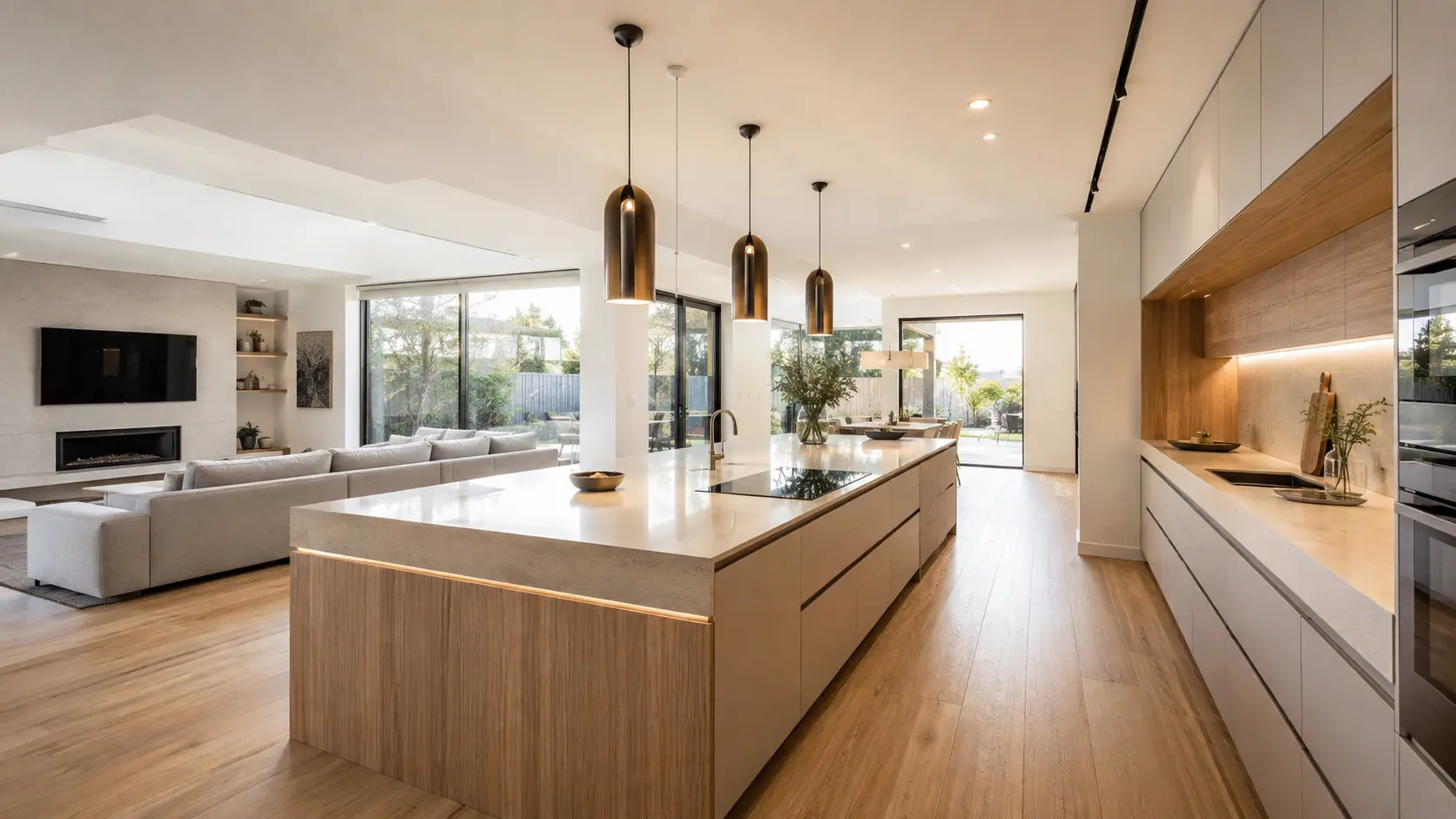
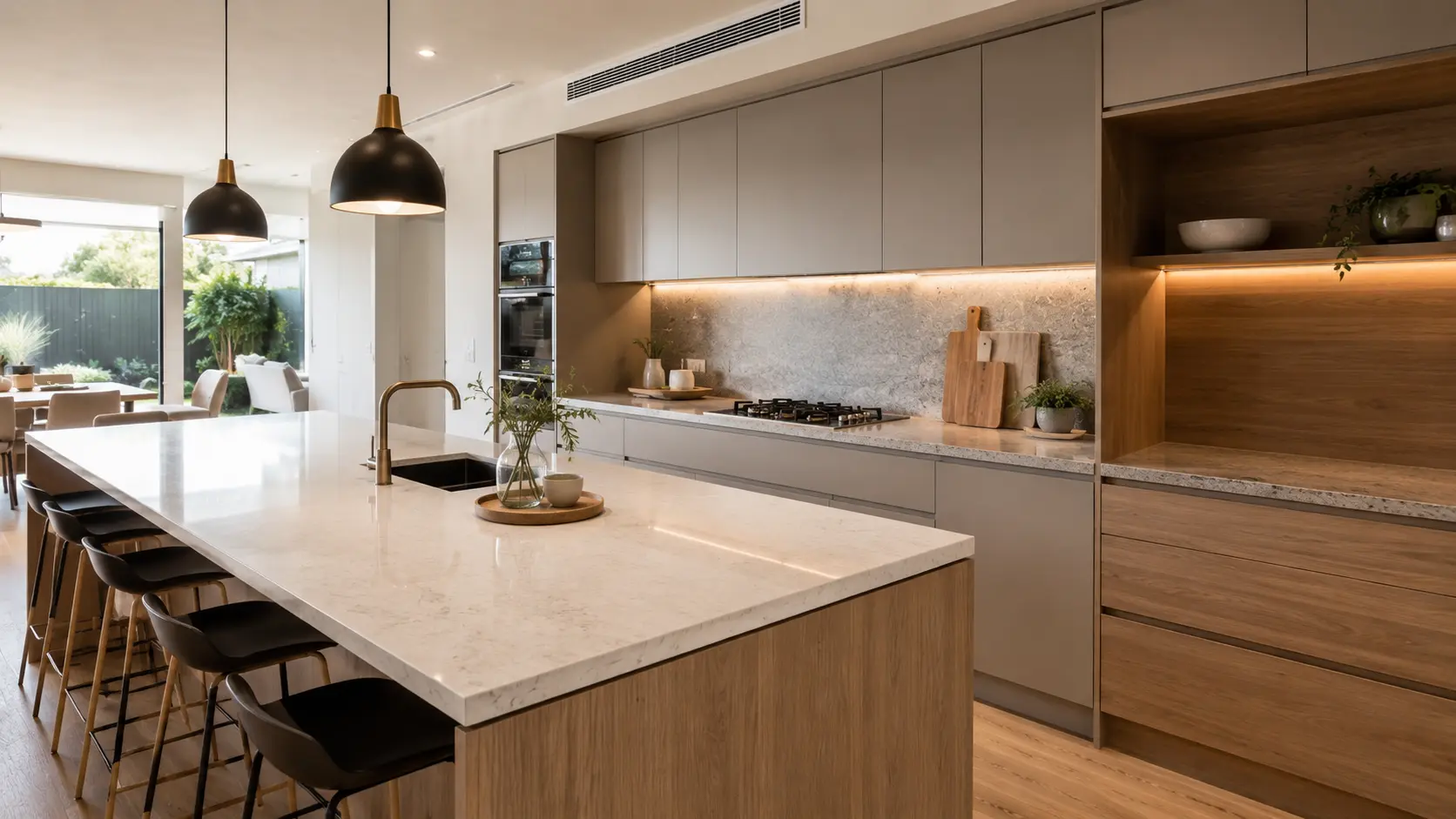
One increasingly popular approach is to combine classic cabinet doors with modern materials. For example, muted painted cabinets can be paired with a stone-effect worktop, contemporary pendant lighting and minimalist stools.
This creates a kitchen with traditional character but a distinctly current feel.
Using Two Colours in a Shaker Kitchen
Two-tone cabinetry can also bring a fresh dimension to the Shaker style.
A common approach is to use one colour for the main cabinets and another for the island. This creates a clear focal point while keeping the overall design cohesive.
Some combinations to consider include:
- Warm white with sage green
- Cream with deep blue
- Taupe with natural timber
- Soft grey with charcoal
- Off-white with muted green
The key is to choose colours that complement rather than compete with one another.
Why Shaker Works So Well in Family Kitchens
Kitchens are often among the busiest rooms in a home. They need to cope with cooking, cleaning, conversations, homework, entertaining and everything in between.
The straightforward construction and practical proportions of a Shaker Kitchen make it particularly well suited to these everyday demands.
Its simple appearance also means small changes can make a big difference. New handles, fresh wall colours or different accessories can update the room without completely changing its identity.
For families, this ability to adapt is valuable. A kitchen can evolve with the household rather than feeling tied to a particular moment in design.
Planning Your Shaker Kitchen Properly
The door style is only one part of the overall design. Before choosing your final colour and finish, think carefully about how the room will be used.
Start with the layout and identify the areas where you need the most storage and preparation space. Consider the position of appliances, the amount of natural light and how people move through the kitchen.
Then look at the materials together rather than selecting each element separately.
Think about:
- Cabinet colour
- Worktop finish
- Flooring
- Wall tiles
- Handles
- Lighting
- Splashback design
- Appliance finishes
- Seating and accessories
VisionPD’s supplied website describes its kitchen approach as covering design, supply and installation, with bespoke joinery planned around the individual space, style and practical requirements. The business also offers modern and traditional kitchen styles and guidance on finishes, flooring, lighting and accessories.
That whole-room approach is particularly useful with a Shaker Kitchen because the simplicity of the cabinetry allows the supporting details to become much more important.
Shaker Kitchens Beyond the Kitchen
A well-planned renovation often looks at more than one room, especially when homeowners want a consistent style throughout the property.
For those considering a wider home update, Bathroom Renovations can be a natural addition to the project. The supplied VisionPD website also highlights complete bathroom projects covering design through installation, including family bathrooms, cloakrooms, ensuites and wetrooms.
Using a similar approach across different rooms can help create a more connected and carefully considered home.
Final Thoughts
The Shaker Kitchen has remained popular because it does not rely on passing fashions. Its simple framed doors, balanced proportions and adaptable design give homeowners the freedom to create something personal.
It can be traditional or contemporary, understated or colourful, warm or dramatic. More importantly, it can evolve over time.
That is what makes the Shaker style so enduring. Rather than competing with the rest of the room, it provides a dependable foundation for the colours, materials and details that make a kitchen feel like your own.
When carefully planned around your space and everyday routines, a Shaker Kitchen can offer the rare combination of timeless appearance, practical functionality and lasting character.